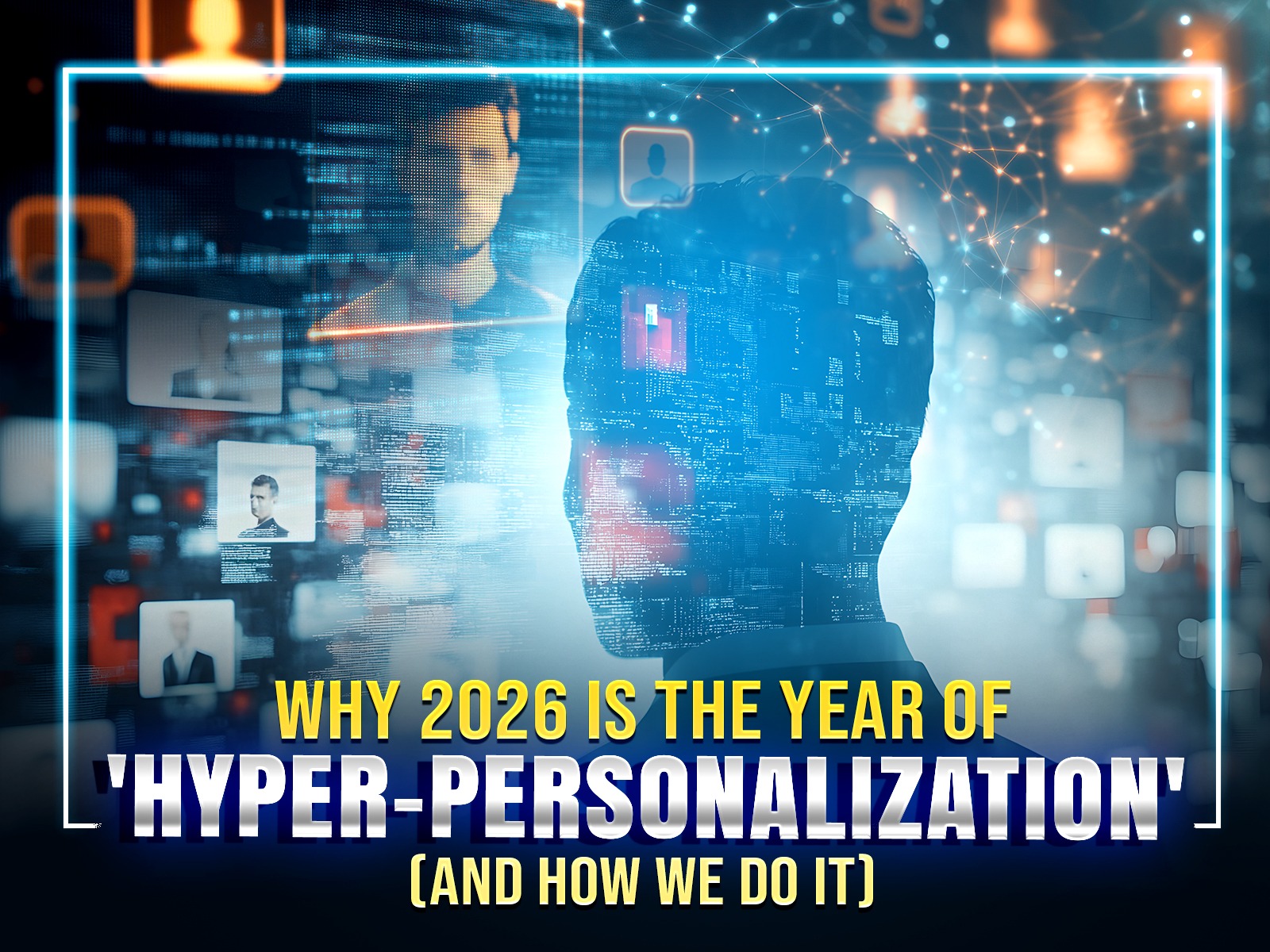
Digital experiences have come a long way. What once felt impressive—using a customer’s name in an email or recommending a product based on past purchases—now feels basic. As we move into 2026, users expect more than generic personalization. They expect experiences that understand them in real time, adapt instantly, and feel genuinely human.
This shift marks the rise of hyper-personalization. At Asteeri Infotech - top web development company, we believe 2026 is not just another step forward in digital evolution—it’s a turning point. Hyper-personalization is no longer a “nice to have.” It’s the standard that separates brands people trust from those they ignore.
In this blog, we’ll explore why 2026 is the year of hyper-personalization, what makes it different from traditional personalization, and how Asteeri Infotech delivers it in a practical, ethical, and results-driven way.
What Is Hyper-Personalization?
Hyper-personalization goes far beyond surface-level customization. It uses real-time data, behavioral insights, artificial intelligence, and context awareness to create digital experiences that are uniquely tailored to each individual—delivered at the exact moment they are most relevant.
Unlike traditional personalization, which relies heavily on static information, hyper-personalization adapts instantly as user behavior changes. Instead of simply asking:
“Who is this user?”
Hyper-personalization focuses on a more powerful question:
“What does this user need right now, and how can we deliver it instantly?”
This approach shifts personalization from being reactive to being proactive. It allows businesses to respond in real time, adjusting content, recommendations, messaging, and user journeys based on live signals rather than assumptions.
Hyper-personalization considers multiple layers of context, including:
The result is an experience that feels intuitive and relevant. Instead of being interrupted by generic messaging, users feel understood. Hyper-personalization turns digital interactions into meaningful conversations—building trust, reducing friction, and delivering value exactly when it matters most.
Why Traditional Personalization Is No Longer Enough?
For many years, personalization followed a simple formula. Brands used first names in emails, grouped users by age or location, and displayed basic recommendations like “customers also bought.” At the time, these efforts felt thoughtful and innovative. Today, they are simply expected—and in many cases, overlooked.
Modern users are exposed to hundreds of digital messages every day. As a result, surface-level personalization no longer captures attention or builds a connection. When every brand uses the same tactics, those tactics stop standing out.
The Problem With Old-Style Personalization
Traditional personalization has several clear limitations:
In 2026, digital behavior is fast, fragmented, and constantly evolving. Users switch between devices, platforms, and channels within minutes. They expect brands to recognize this movement and respond instantly. When a website, app, or message feels outdated or irrelevant—even for a moment—attention is lost.
This is where hyper-personalization becomes essential. By responding to real-time signals and current intent, hyper-personalization closes the gap between expectation and experience. It transforms generic interactions into meaningful, adaptive experiences that feel relevant, timely, and genuinely helpful.
Why 2026 Is the Tipping Point for Hyper-Personalization?
Several powerful trends are converging in 2026, making hyper-personalization not just possible—but essential.
1. Users Now Expect Relevance, Not Options
Choice overload is real. People don’t want more options—they want **the right option**.
In 2026:
Hyper-personalization reduces friction by removing unnecessary steps and presenting only what matters.
2. Real-Time Data Is Finally Actionable
For years, businesses collected massive amounts of data—but couldn’t use it effectively. That has changed.
Today, systems can:
2026 is the year when real-time insight becomes real-time action.
3. AI Has Matured Beyond Automation
Earlier, AI focused on automation and efficiency. In 2026, AI focuses on understanding intent.
Modern AI can:
This makes personalization smarter, faster, and far more human-like.
4. Customers Reward Brands That “Get Them.”
Trust is the new currency.
Brands that demonstrate understanding earn:
Hyper-personalization shows customers you respect their time, preferences, and context.
5. Competition Is One Click Away
In a crowded digital world, sameness is invisible. Hyper-personalization creates differentiation by:
In 2026, personal relevance is a competitive advantage.
6. Privacy-First Personalization Has Become the Standard
By 2026, users are more aware of how their data is used—and more selective about who they trust. Blanket tracking and intrusive tactics no longer work. Hyper-personalization succeeds because it focuses on relevance with respect, using transparent, permission-based data to improve experiences rather than exploit attention. Brands that personalize responsibly build trust instead of resistance.
7. Omnichannel Experiences Are No Longer Optional
Users no longer interact with brands on a single platform. They move seamlessly between websites, apps, email, social media, and support channels. In 2026, customers expect continuity across all touchpoints. Hyper-personalization connects these interactions, ensuring experiences feel consistent, familiar, and intelligent—no matter where the journey continues.
8. Speed Has Become a Core Experience Metric
In 2026, speed is not just about page load time—it’s about decision speed. Users expect brands to understand their intent instantly and respond without delay. Hyper-personalization removes unnecessary steps, reduces friction, and accelerates user journeys by anticipating needs before users have to ask.
9. Digital Experiences Are Replacing Human Interactions
As more interactions move online, digital experiences are expected to feel human. Hyper-personalization brings empathy into digital design by responding to context, behavior, and intent in real time. In 2026, the brands that succeed are the ones whose digital touchpoints feel attentive, helpful, and conversational—not robotic.
10. Generic Experiences No Longer Convert
In a highly competitive digital landscape, generic experiences blend into the background. Users are quick to disengage when content feels irrelevant or mass-produced. Hyper-personalization cuts through the noise by delivering precisely what users need, when they need it. In 2026, relevance is not just a feature—it is the foundation of conversion.
Where Hyper-Personalization Matters Most in 2026?
Hyper-personalization is no longer limited to marketing campaigns or promotional messages. In 2026, it shapes every digital interaction, influencing how users discover, engage with, and stay connected to brands. Wherever users expect speed, relevance, and ease, hyper-personalization plays a critical role.
1. Websites & Landing Pages
Websites are often the first point of contact. Hyper-personalization enables dynamic content that adjusts based on visitor intent, showing the most relevant messages, visuals, or offers instantly. Personalized calls-to-action guide users toward the next best step, while adaptive navigation paths reduce friction by highlighting what matters most to each visitor.
2. E-Commerce
In online shopping, relevance drives revenue. Real-time product recommendations respond to browsing behavior as it happens, while personalized pricing and offers increase conversion without feeling intrusive. Context-aware checkout flows remove unnecessary steps, making the buying process faster and more intuitive.
3. SaaS Platforms
For SaaS products, hyper-personalization improves usability and adoption. Role-based dashboards ensure users see only what’s relevant to their responsibilities. Usage-driven feature suggestions help users discover value faster, and adaptive onboarding shortens the learning curve.
4. Customer Support
Support experiences benefit from predictive help prompts and personalized self-service options. Context-aware routing ensures users reach the right help quickly, reducing frustration and resolution time.
5. Content & Media
In content-driven platforms, hyper-personalization delivers interest-based content, adjusts relevance by time and context, and formats content to match the user’s preferred channel—making every interaction feel intentional and engaging.
How Asteeri Infotech Approaches Hyper-Personalization?
At Asteeri Infotech, we don’t treat hyper-personalization as a buzzword or a short-term trend. We approach it as a systematic, long-term strategy built on clarity, ethics, and measurable outcomes. Our goal is not to overwhelm users with personalization, but to deliver experiences that feel natural, helpful, and genuinely relevant.
Here’s how we do it.
1. We Start With Intent, Not Data Volume
More data does not automatically lead to better personalization. In fact, excessive or unfocused data often creates noise rather than insight. At Asteeri Infotech, we begin by understanding user intent.
We focus on:
By identifying high-intent moments, we ensure personalization is applied where it truly matters. This approach keeps experiences focused, efficient, and meaningful—rather than cluttered or distracting.
2. We Design Personalization Into the Experience
Hyper-personalization is not something that can be “added later.” It must be built into the foundation of the digital experience.
We:
This ensures personalization feels seamless, not forced. Experiences evolve naturally based on user behavior while maintaining visual and functional consistency across platforms.
3. We Use AI With Purpose, Not Hype
Artificial intelligence is a powerful tool—but only when used thoughtfully. At Asteeri Infotech, AI is never used just to appear advanced.
We use AI to:
Every AI-driven decision is guided by two principles: user benefit and business value. This ensures personalization feels intelligent and helpful, not overwhelming or mechanical.
4. We Respect Privacy and Build Trust
Hyper-personalization only works when users feel safe and respected. Trust is non-negotiable.
Our approach emphasizes:
We personalize with permission and purpose—never intrusively. This builds long-term trust while delivering relevant experiences that users actually appreciate.
5. We Personalize Across the Entire Journey
True hyper-personalization is consistent. It doesn’t stop at marketing or begin at conversion.
We align personalization across:
This creates a unified experience where users feel understood at every stage—not tracked or segmented. The result is a journey that feels coherent, human, and deeply relevant.
At every step, Asteeri Infotech, the best web development company, focuses on personalization that delivers clarity over complexity and value over volume—turning digital experiences into meaningful connections.
Frequently Asked Questions (FAQs)
1. What is hyper-personalization?
Hyper-personalization is an advanced form of personalization that uses real-time data, AI, behavioral insights, and context awareness to deliver experiences tailored to each individual at the exact moment they need it. Unlike traditional personalization, it adapts instantly based on user intent, behavior, and preferences.
2. How is hyper-personalization different from traditional personalization?
Traditional personalization often relies on static data like names, segments, or past purchases. Hyper-personalization is dynamic, real-time, and predictive, adjusting experiences based on live behavior, device, location, timing, and intent signals.
3. Which industries benefit most from hyper-personalization?
Hyper-personalization can transform e-commerce, SaaS platforms, digital media, marketing, and customer support. Any business that interacts with users digitally—across websites, apps, or emails—can deliver better engagement, loyalty, and conversions.
4. Is hyper-personalization intrusive?
When done ethically, hyper-personalization is helpful, not invasive. Asteeri Infotech focuses on privacy-first practices, transparency, and consent, ensuring users feel understood rather than tracked.
5. How can a business implement hyper-personalization effectively?
Effective hyper-personalization requires:
Asteeri Infotech combines these elements to create dynamic, meaningful, and measurable experiences for every user.
Final Thoughts
2026 marks a pivotal moment where hyper-personalization moves from being a “nice-to-have” trend to a baseline expectation for digital experiences. Users today no longer settle for generic messaging or one-size-fits-all interactions.
They notice—and reward—brands that truly understand their needs, adapt instantly to context, and deliver value in the right place, at the right time. Hyper-personalization isn’t about overwhelming users with more content or options. It’s about delivering what matters most, anticipating needs, and creating meaningful connections at every touchpoint.
At Asteeri Infotech - top mobile app development company, we help businesses transform raw data into actionable insights, advanced technology into empathetic experiences, and personalization into measurable impact.
By combining real-time intelligence, AI-driven predictions, and ethical data practices, we create experiences that feel human, relevant, and deeply engaging. The future of digital isn’t louder—it’s smarter, faster, and profoundly personal, and hyper-personalization is the key to staying ahead.

March 20,2025
May 20,2022
February 6,2025
November 19,2024
February 19,2024


Copyright 2026 | All Rights Reserved by Asteeri Infotech
.jpg)