Every business reaches a point where its growth ambitions exceed the capabilities of its current team. A company may have a promising marketing strategy but lack an experienced SEO specialist.
Another may need reliable IT support, yet hiring a full-time professional seems too expensive. Some businesses struggle to find skilled designers, developers, virtual assistants, or digital marketing professionals who can contribute immediately.
These challenges can slow down projects, increase operational pressure, and prevent businesses from taking advantage of new opportunities. This is where virtual employees can make a meaningful difference.
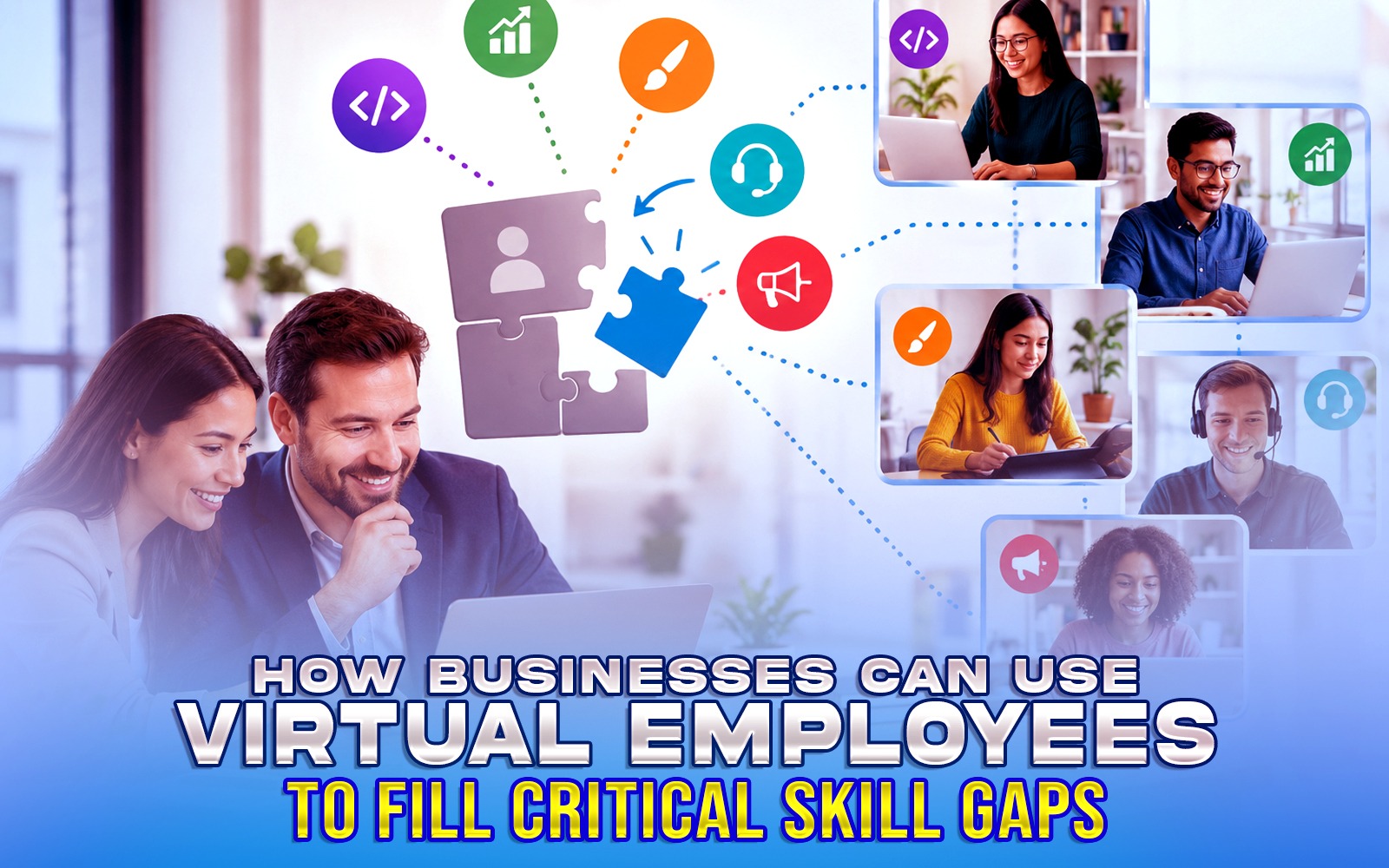
Virtual employees allow businesses to access professional skills remotely without necessarily expanding their traditional in-house workforce. They can support specific projects, manage ongoing responsibilities, and bring expertise that may be difficult or expensive to develop internally.
For growing companies, startups, and established organisations, this approach offers another way to address skill shortages while maintaining flexibility.
At Asteeri Infotech - top digital marketing agency, understanding how businesses can use digital solutions and remote talent to improve their operations is an important part of helping organisations adapt to changing business needs.
In this guide, we explore how virtual employees can help businesses fill critical skill gaps, where they can add value, and what companies should consider before adopting this approach.
What Are Virtual Employees?
Virtual employees are professionals who perform business tasks remotely using digital communication, collaboration, and project management tools.
They may work as dedicated remote team members, independent contractors, or professionals supplied through an outsourcing or staffing arrangement. Their responsibilities can range from administrative support to specialised technical work.
Unlike traditional office-based employees, virtual employees do not need to work from the company's physical premises. They can contribute from another city or country while collaborating with internal teams through online platforms.
Depending on the business arrangement, virtual employees may work full-time, part-time, on a project basis, or according to specific operational requirements.
Common examples include:
The main purpose is not simply to outsource work. It is to make specialised skills available when and where a business needs them.
Understanding Critical Skill Gaps in Modern Businesses
A skill gap exists when the capabilities available within a business do not fully meet the requirements of its operations or future plans. Some gaps develop gradually as technology changes. Others appear when a company introduces a new service, expands into another market, or experiences a sudden increase in demand.
For example, a small business may have employees who understand its products and customers but lack the technical knowledge required to improve its website's performance. Hiring an experienced web developer could address that problem, but the business may not have enough ongoing development work to justify a permanent position.
Other businesses may have an established technical team but need additional expertise in cybersecurity, automation, digital advertising, or analytics.
Critical skill gaps commonly occur in the following areas.
1. Digital Marketing and Online Visibility
Businesses increasingly depend on online channels to attract customers. However, managing search engine optimization, paid advertising, social media, and website content requires different skills. A company may understand its target audience but struggle to develop a consistent digital marketing strategy without experienced professionals.
2. Technology and Software Development
As businesses adopt digital systems, they may require developers, software testers, IT support specialists, or professionals who can integrate different platforms. These skills can be difficult to maintain internally, particularly when technology requirements change frequently.
3. Data Analysis and Business Reporting
Many organisations collect customer, sales, and operational data without having the expertise to interpret it effectively. Data analysts can help businesses organise information, identify patterns, and develop reports that support better-informed decisions.
4. Customer Service and Administrative Support
Growing businesses often experience increasing workloads involving customer enquiries, scheduling, documentation, and routine administration. Without adequate support, these responsibilities can distract managers and specialised employees from more valuable work.
5. Creative and Content Production
Websites, social media platforms, advertisements, and digital campaigns require consistent creative content. Businesses may need graphic designers, video editors, copywriters, or content specialists to maintain their communication efforts.
Recognising these gaps is the first step towards deciding whether virtual employees are a suitable solution.
7 Ways Businesses Can Use Virtual Employees to Fill Skill Gaps
Businesses don’t always have the in-house expertise needed to keep up with changing demands. Virtual employees provide access to specialised skills, helping companies improve productivity, manage workloads, and achieve their goals without expanding their traditional workforce.
Here are seven practical ways businesses can use virtual employees to fill critical skill gaps.
1. Access Specialised Expertise Without Building Every Skill In-House
One of the main advantages of virtual employees is the ability to access expertise that may not currently exist within a company. Recruiting and developing an entire internal department can take considerable time and resources.
However, some businesses only need particular skills for a specific period or set of responsibilities. For instance, a company preparing to launch a new website might require a web developer, an SEO specialist, and a UI/UX designer.
Instead of recruiting permanent employees for every role, the company could engage remote professionals to support the launch and provide additional assistance when required. This approach allows businesses to access specialised knowledge while keeping their staffing arrangements aligned with actual workloads.
It can be particularly useful for startups and small businesses that need professional expertise but have limited hiring capacity.
2. Strengthen Digital Marketing Capabilities
Digital marketing is an area where virtual employees can make a practical contribution. A business may have an excellent product or service but lack the expertise needed to reach potential customers online.
Virtual marketing professionals can help bridge this gap by managing specific activities or supporting a broader marketing strategy.
For example, businesses can engage remote professionals to handle:
A virtual SEO specialist could identify technical problems, improve website structure, and develop content recommendations based on relevant search terms.
Similarly, a remote content writer could help maintain a publishing schedule while internal employees focus on product development and customer relationships. At Asteeri Infotech - , businesses can explore digital marketing and top SEO services to support their online visibility and content requirements.
The key is to identify the marketing activities that require additional expertise rather than assigning every digital responsibility to one person.
3. Improve IT Support and Technology Operations
Technology problems can interrupt daily business activities. Delayed troubleshooting, outdated systems, and limited technical knowledge can affect employee productivity and customer experiences. Virtual IT professionals can help businesses address these challenges by providing remote technical assistance and specialised services.
Depending on their qualifications and the agreed scope of work, virtual IT specialists may support:
For example, a growing organisation might not have enough internal expertise to maintain its website, manage software integrations, and troubleshoot technical issues. A virtual technology professional can provide support for these responsibilities while the company's internal team concentrates on its core operations.
Businesses should clearly define access permissions, security requirements, response times, and escalation procedures before providing remote professionals with access to important systems.
4. Increase Productivity Through Administrative Support
Not every skill gap involves advanced technical knowledge. Administrative responsibilities can also create serious operational challenges when businesses lack sufficient support. Managers and experienced employees often spend time answering routine enquiries, preparing documents, scheduling appointments, updating records, and organising information.
Although these activities are necessary, they may leave less time for planning, customer relationships, and business development. Virtual assistants can help manage appropriate administrative tasks remotely.
Their responsibilities may include:
For example, a business owner who spends several hours each day organising appointments and responding to routine messages may benefit from virtual administrative assistance. By delegating clearly defined responsibilities, the owner can redirect more attention towards activities that require personal judgement and business knowledge.
However, businesses should establish clear procedures for handling confidential information and customer communications.
5. Support Software Development and Digital Transformation
Digital transformation often requires capabilities that existing employees may not possess. A company may want to introduce a customer relationship management system, automate repetitive processes, improve its website, or develop a new digital product.
These projects can require several different skills, including programming, testing, design, integration, and technical project management. Virtual employees can help businesses access these capabilities without necessarily creating a permanent internal technology department.
For example, a company implementing a new customer management platform may engage remote specialists to configure the system, migrate approved data, test workflows, and train employees.
Similarly, a business developing a website could work with virtual designers and developers to improve the user experience and implement new features.
A successful project should begin with clearly documented requirements, realistic milestones, defined responsibilities, and an agreed process for reviewing completed work.
This helps ensure that external expertise contributes to the company's long-term digital objectives rather than producing disconnected solutions.
6. Scale Teams According to Business Demand
Workloads are not always consistent throughout the year. Retail businesses may experience seasonal demand. Marketing agencies may need additional specialists when several campaigns begin simultaneously. Technology companies may require extra development support before a product launch.
Hiring permanent employees for every temporary increase in workload may not be practical. Virtual employees can provide an alternative by allowing businesses to adjust the size and composition of their remote teams according to changing requirements.
For example, an e-commerce business preparing for a major promotional period might need additional customer support representatives, content creators, and digital advertising specialists.
After the campaign, the business may no longer require the same level of support. A flexible staffing arrangement can help the company respond to these changes without automatically committing to permanent positions.
However, scaling should still involve proper onboarding, workload planning, and quality control. Adding more remote professionals without clear coordination can create communication problems rather than solve them.
7. Bring Fresh Perspectives to Business Challenges
Virtual employees can also introduce knowledge gained from working with different industries, technologies, and business processes. An experienced remote professional may have encountered challenges similar to those a company is currently facing.
For instance, a virtual marketing specialist may understand how to organise content production, while a software developer may be familiar with integrating systems that previously operated separately. Their experience can help businesses consider alternative approaches and identify opportunities to improve existing workflows.
This does not mean that external professionals automatically understand a company's customers, culture, or operational priorities. Businesses should encourage knowledge sharing between virtual employees and internal teams so that useful expertise becomes part of the organisation's ongoing capabilities.
Virtual Employees vs Traditional Hiring: What Should Businesses Consider?
Virtual employees and traditional in-house employees can both contribute to business growth, but the right approach depends on a company's needs, budget, and long-term goals.
Virtual employees typically work remotely, allowing businesses to access specialised professionals from different locations without requiring them to work on-site. They can also offer flexibility through project-based, part-time, or ongoing arrangements.
Traditional hiring, on the other hand, often involves recruiting employees for established roles within the organisation, which can support direct collaboration, in-person training, and continuous knowledge sharing.
However, these differences are not absolute, as traditional employees can also work remotely, and virtual professionals can become long-term members of a team.
Before making a decision, businesses should consider the nature of the work, required expertise, communication needs, staffing flexibility, and overall costs.
It is also important to distinguish between virtual employees and independent contractors, as their legal classification depends on the actual working relationship and applicable employment laws, rather than simply where they work.
The Future of Virtual Employees in Business Operations
Remote work and digital collaboration have created more ways for businesses to access professional expertise.
As organisations continue adopting cloud platforms, automation, online communication, and digital business systems, virtual employees can become part of a broader workforce strategy.
Businesses may combine internal teams, remote specialists, consultants, and technology tools to address different operational requirements.
For example, an organisation could retain an in-house manager while engaging virtual professionals for software development, SEO, design, or data analysis.
This blended approach allows companies to maintain internal ownership of their priorities while accessing specialised support when necessary.
However, successful remote work still depends on people, communication, accountability, and effective management. Technology can make collaboration easier, but it cannot replace clear business objectives or thoughtful team coordination.
Conclusion
Critical skill gaps can affect productivity, delay projects, and make it harder for businesses to adapt to changing market requirements. Virtual employees offer a practical way to access specialised expertise, strengthen digital marketing, support technology operations, improve administrative efficiency, and respond to changing workloads.
The real value comes from matching the right professional skills with clearly defined business needs. Before adopting a virtual employee strategy, businesses should identify their most important skill gaps, compare available staffing options, establish clear responsibilities, and implement appropriate communication and security processes.
When managed effectively, virtual employees can complement internal teams and help businesses build the capabilities they need for sustainable growth. The best digital marketing agency, Asteeri Infotech supports businesses looking to strengthen their digital presence through services such as SEO, digital marketing, and website-related solutions.
By identifying the right skills and applying them to specific business objectives, organisations can take practical steps towards improving their digital operations and reaching their growth goals. If your business is facing challenges with online visibility, website performance, or digital marketing capabilities, explore how Asteeri Infotech can support your digital growth journey.

June 27,2025
February 28,2023
January 17,2024
September 8,2022
August 31,2026

Copyright 2026 | All Rights Reserved by Asteeri Infotech

.jpg)

.jpg)