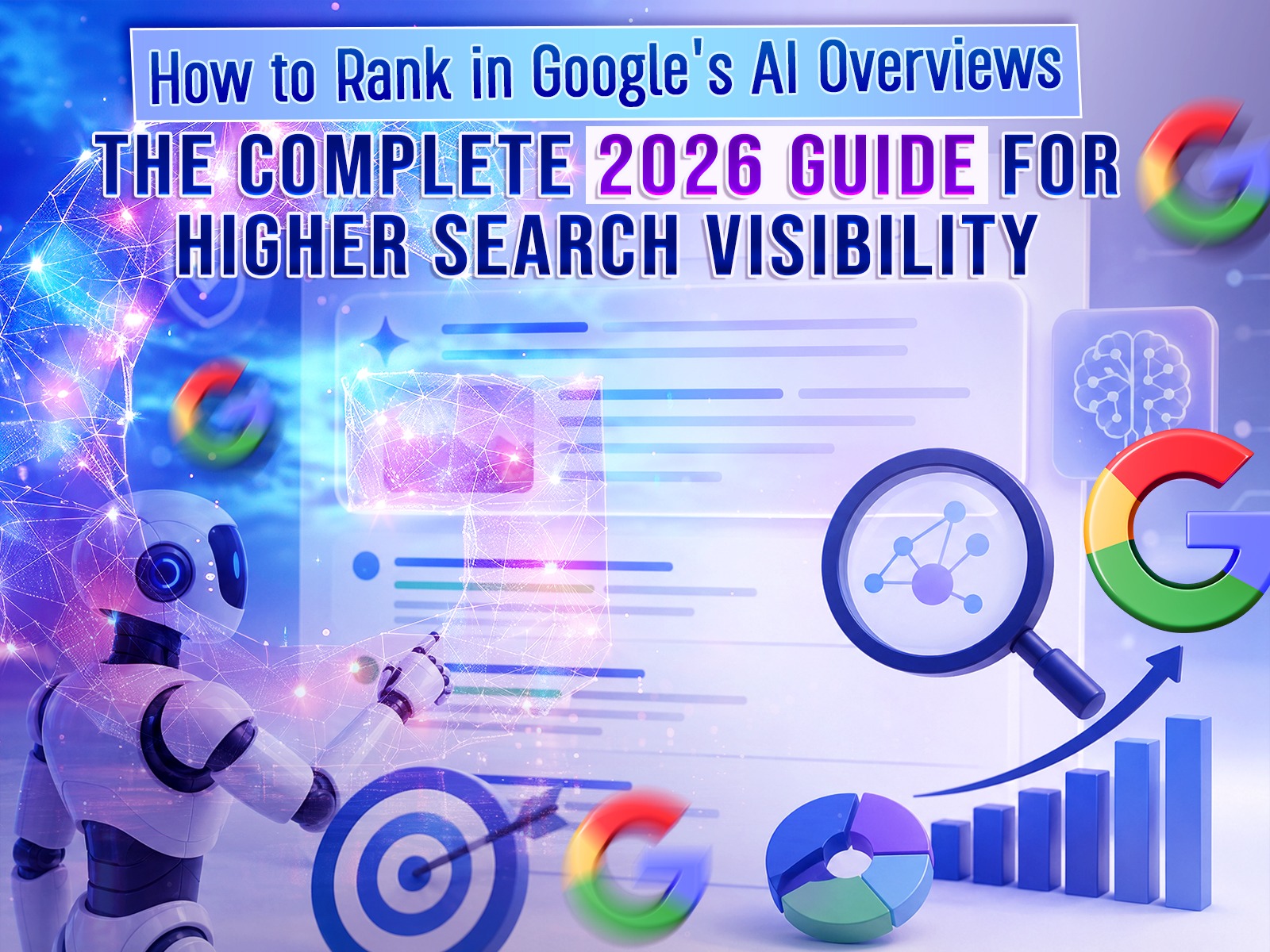
Search has evolved dramatically over the last few years. Users no longer browse through multiple pages to find answers—they expect instant, reliable information. Google has responded to this shift with AI Overviews, an AI-powered search experience that summarizes information from trusted websites and presents it directly in the search results.
For businesses, bloggers, and digital marketers, this represents a significant opportunity. Appearing in an AI Overview can dramatically increase brand visibility, strengthen credibility, and drive highly qualified organic traffic. However, ranking in AI Overviews requires more than traditional keyword optimization.
Google now prioritizes content that demonstrates expertise, authority, trustworthiness, and genuine value. In this comprehensive guide, you'll learn how Google's AI Overviews work, the factors influencing inclusion, and the practical SEO strategies you can implement today to improve your chances of being featured.
Understanding Google's AI Overviews
Google's AI Overviews are AI-generated summaries that appear at the top of search results for many informational queries. Powered by Google's advanced AI models, these summaries combine insights from multiple authoritative websites to provide users with quick, accurate answers.
Unlike Featured Snippets, which typically extract a passage from one page, AI Overviews synthesize information from several reliable sources. This means your content may be cited alongside other respected websites if it provides unique, accurate, and valuable information.
For example, if someone searches "How to improve local SEO", Google may generate an overview explaining the importance of Google Business Profile optimization, local citations, customer reviews, and localized content while linking to several trusted sources.
This change emphasizes quality over rankings alone. Even if your page isn't in the first position, exceptional content still has the potential to be referenced.
Why Businesses Should Care About AI Overviews
Google processes billions of searches every day, and AI-generated results are becoming increasingly common. Businesses that optimize for AI search gain a significant competitive advantage.
Some key benefits include:
Being mentioned in an AI Overview also positions your brand as a reliable source of information, making users more likely to explore your website and services.
How Google Chooses Sources for AI Overviews
Google has not released a checklist guaranteeing inclusion, but research and SEO observations suggest that AI Overviews evaluate numerous signals simultaneously.
These include:
Rather than relying on one ranking factor, Google's AI attempts to identify content that best answers the user's question accurately and comprehensively.
Proven Strategies to Rank in Google's AI Overviews
Getting your content featured in Google's AI Overviews requires more than simply targeting the right keywords. Google's AI evaluates multiple signals, including content quality, user intent, technical SEO, website authority, and overall user experience, to determine which sources provide the most accurate and helpful answers.
Businesses that consistently create valuable, trustworthy, and well-structured content are far more likely to earn citations in AI-generated search results. The following best practices will help you optimize your website for AI-powered search, strengthen your online authority, and improve your chances of appearing in Google's AI Overviews while delivering a better experience for your audience.
1. Create People-First Content
One of Google's most important recommendations is creating content primarily for people—not search engines.
Every article should answer real questions and solve genuine problems. Instead of writing simply to target keywords, focus on educating readers with useful, actionable information.
For example, if you're writing about website security, don't just define SSL certificates. Explain why they matter, how to install them, common mistakes to avoid, and how they affect SEO and user trust.
Content that demonstrates practical knowledge is far more valuable than articles that merely repeat information already available elsewhere.
2. Understand Search Intent Before Writing
Search intent remains one of the strongest ranking signals.
Ask yourself:
There are four primary types of search intent:
Users want to learn something.
Example:
Users are trying to reach a particular website or brand.
Example:
Users are researching before making a purchase.
Example:
Users are ready to buy.
Example:
When your content perfectly matches user intent, Google is more likely to consider it valuable enough for AI-generated summaries.
3. Build Topical Authority
Publishing one excellent article is not enough. Google increasingly evaluates whether your website demonstrates expertise across an entire subject.
For example, if your company specializes in digital marketing, create an extensive content hub covering:
These articles should be interconnected using internal links, allowing search engines to understand the breadth and depth of your expertise.
4. Demonstrate EEAT Throughout Your Website
Google places considerable emphasis on **Experience, Expertise, Authoritativeness, and Trustworthiness (EEAT)**.
a. Experience
Share firsthand insights, project examples, case studies, or lessons learned from real-world implementations. Content based on genuine experience is more compelling than generic advice.
b. Expertise
Ensure articles are written or reviewed by knowledgeable professionals. Include author bios, qualifications, or relevant industry experience where appropriate.
c. Authoritativeness
Build your reputation through consistent publishing, speaking engagements, industry recognition, quality backlinks, and mentions from reputable sources.
d. Trustworthiness
Trust signals include:
AI systems are more likely to reference websites that consistently demonstrate credibility.
5. Write Comprehensive Content
Thin articles rarely perform well in AI-driven search. Instead, create comprehensive resources that answer both primary and secondary questions. For example, an article on website speed should discuss:
Comprehensive articles reduce the need for users to visit multiple websites, aligning with Google's goal of delivering complete answers.
6. Structure Content for AI Readability
Well-organized content helps both users and AI systems understand your information.
Use:
Logical organization makes it easier for AI models to identify important information.
7. Answer Questions Clearly
Many AI Overviews begin with direct answers. Instead of burying key information deep within paragraphs, provide concise answers immediately after each heading.
Example:
What is Schema Markup?
Schema markup is structured data that helps search engines understand webpage content more accurately, improving search visibility and eligibility for enhanced search features.
Then elaborate with examples and implementation tips.
8. Add Frequently Asked Questions
FAQ sections naturally address related searches and long-tail keywords.
Consider answering questions such as:
These questions improve topical relevance while helping readers quickly find answers.
9. Implement Structured Data
Schema markup gives Google additional context about your content.
Useful schema types include:
Although schema alone won't secure AI Overview placement, it strengthens Google's understanding of your website.
10. Optimize Images and Multimedia
Visual content improves engagement and accessibility.
Best practices include:
Images can reinforce key concepts and improve user experience, which indirectly supports SEO performance.
11. Improve Technical SEO
Strong content requires a technically sound website.
Focus on:
Technical optimization ensures Google can efficiently crawl and understand your website.
12. Strengthen Internal Linking
Internal links help distribute authority across your website while guiding users toward additional valuable resources. For example, an article on AI Overviews could naturally link to related topics such as:
This strengthens topical authority and improves user engagement.
13. Earn High-Quality Backlinks
Backlinks remain one of Google's strongest trust signals.
Focus on earning links through:
Avoid buying low-quality links, as they may harm long-term rankings.
14. Keep Content Fresh
Google values current, accurate information. Review older articles regularly to:
Regular updates signal ongoing relevance.
15. Encourage Positive User Experience
User satisfaction influences SEO success. Create pages that are:
When visitors stay longer and explore multiple pages, it sends positive engagement signals.
16. Optimize for Voice Search and Conversational Queries
With AI-powered search and voice assistants becoming more common, users increasingly search using natural language.
Instead of typing:
Users ask:
Write content that answers complete questions naturally and conversationally.
17. Leverage Original Research and Unique Insights
One of the best ways to stand out is by publishing information unavailable elsewhere.
Examples include:
Unique data increases the likelihood that Google and other publishers will reference your content.
18. Monitor SEO Performance
Use analytics tools to measure:
Analyze which pages perform well and continuously improve those with untapped potential.
Common Mistakes That Prevent AI Overview Rankings
Even well-designed websites can struggle to appear in Google's AI Overviews if they overlook essential SEO best practices. Google's AI prioritizes content that is original, trustworthy, and genuinely helpful to users. Publishing duplicate or thin content, stuffing pages with keywords, or relying solely on AI-generated text without human review can reduce your website's credibility and limit its visibility in search results.
Another common mistake is failing to understand search intent. If your content doesn't answer the questions users are actually asking, it is unlikely to be considered for AI-generated summaries. Similarly, neglecting technical SEO, such as slow page speed, poor mobile responsiveness, broken links, or missing structured data, can make it difficult for Google to crawl and interpret your website effectively.
Websites that lack clear author information, customer trust signals, and strong internal linking also miss valuable opportunities to build authority. Outdated content and misleading headlines can further weaken user trust and search performance.
At Asteeri Infotech, we help businesses avoid these pitfalls by implementing modern SEO strategies, creating high-quality people-first content, improving technical website performance, and optimizing every aspect of your digital presence for Google's evolving AI-powered search experience.
By focusing on quality, relevance, and user satisfaction, your website can significantly improve its chances of earning valuable AI Overview citations and achieving sustainable organic growth.
The Future of SEO in the AI Era
AI is changing how people interact with search engines, but the core principles of SEO remain remarkably consistent. Search engines continue to reward websites that provide genuine value, answer questions accurately, and create excellent user experiences.
Businesses should focus on building long-term authority rather than chasing algorithm updates. Invest in educational content, technical excellence, trustworthy branding, and continuous improvement. As AI search becomes more sophisticated, websites with authentic expertise and comprehensive resources will be in the strongest position to succeed.
Instead of viewing AI Overviews as a threat, think of them as an opportunity to become one of the trusted sources Google recommends to millions of users every day.
Frequently Asked Questions
1. What are Google's AI Overviews?
Google AI Overviews are AI-generated summaries that appear at the top of search results, providing quick answers by combining information from multiple authoritative websites.
2. Can a small business rank in AI Overviews?
Yes. Small businesses with well-structured, trustworthy, and informative content can be cited if they effectively answer users' questions and demonstrate expertise.
3. Does structured data guarantee inclusion?
No. Structured data helps Google better understand your content, but inclusion depends on many factors, including content quality, relevance, and trust.
4. How important is EEAT for AI Overviews?
EEAT is extremely important. Demonstrating real experience, expertise, authority, and trust increases your website's credibility and improves its chances of being referenced.
5. Can AI-written content rank?
AI-assisted content can rank if it is carefully reviewed, fact-checked, expanded with original insights, and edited by knowledgeable professionals to provide genuine value.
6. How often should I update my content?
Review your most important pages every three to six months or sooner if there are major industry developments. Keeping content current helps maintain relevance in search results.
Final Thoughts
Ranking in Google's AI Overviews is not about discovering a hidden shortcut or exploiting a single ranking factor. It requires a holistic SEO strategy that combines outstanding content, technical optimization, structured data, EEAT principles, and a deep understanding of user intent.
Businesses that consistently publish original, accurate, and people-first content while maintaining a technically optimized website are far more likely to earn visibility within AI-generated search experiences.
At Asteeri Infotech - top web development company, we help businesses prepare for the future of search through advanced SEO strategies, AI-ready content marketing, website development, technical optimization, and digital growth solutions. Whether you're building a new online presence or improving an existing one, our team is committed to helping your business stay competitive in the evolving world of AI-powered search.

November 19,2024
December 3,2023
March 20,2026
October 21,2022
October 6,2025
August 22,2023
December 7,2020




Copyright 2026 | All Rights Reserved by Asteeri Infotech