Small businesses often face a common challenge: finding new customers without spending too much on marketing. Whether a business offers digital services, sells products, or provides local solutions, generating consistent leads is essential for growth.
Online advertising has made it easier for businesses to reach potential customers, but choosing the right platform can be confusing. Two of the most popular advertising platforms are Google Ads and Facebook Ads.
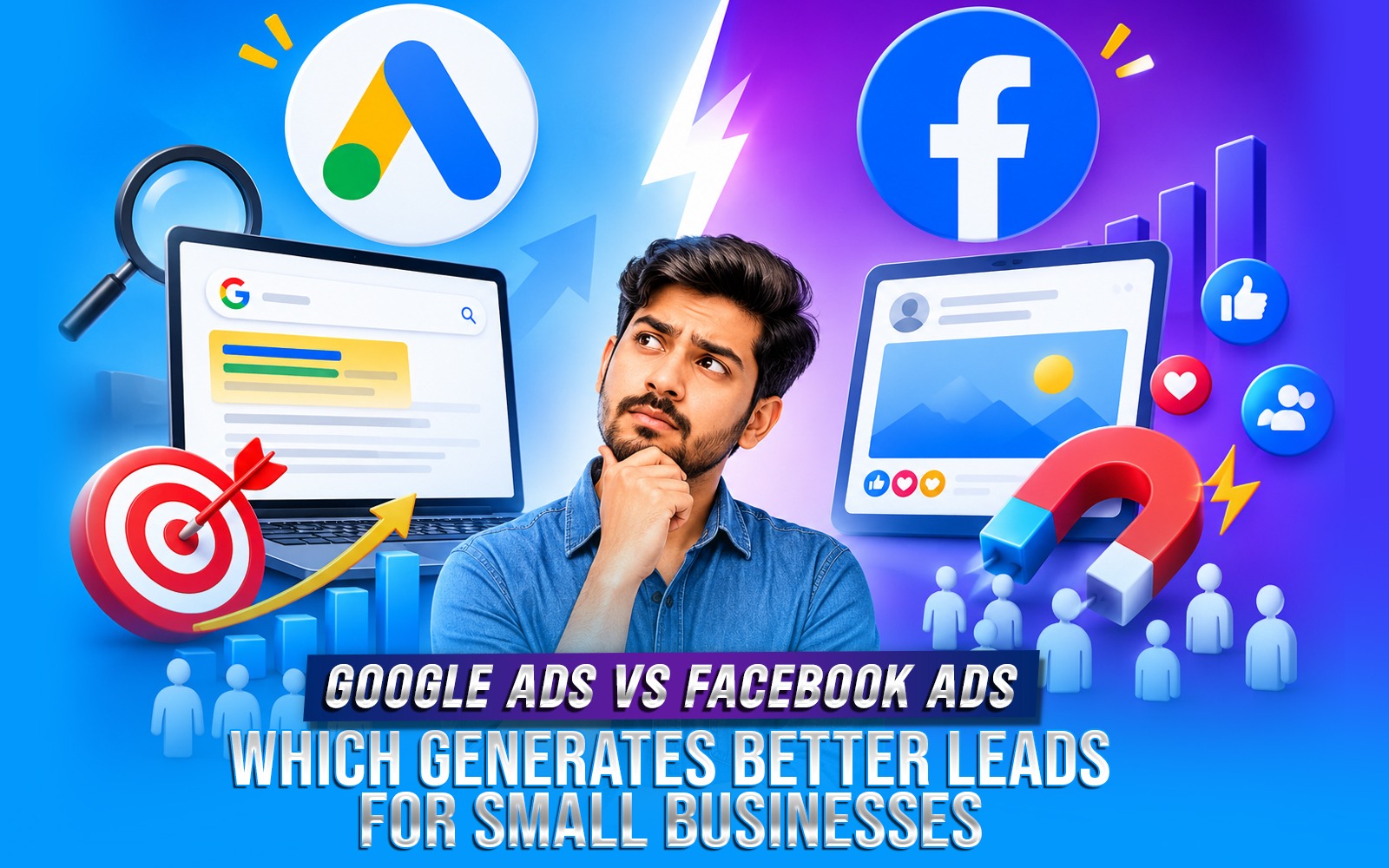
Both offer opportunities to connect with customers, increase website traffic, and generate enquiries. However, they work in different ways and attract audiences with different intentions.
Google Ads helps businesses reach people who are actively searching for specific products or services.
Facebook Ads, which also includes Instagram advertising through Meta, allows businesses to reach people based on their interests, behaviours, demographics, and other audience characteristics.
So, which platform generates better leads for small businesses? The answer depends on your business goals, target audience, budget, and the type of customers you want to attract. Understanding the differences between these platforms can help you make a smarter advertising decision.
Understanding Google Ads
Google Ads is an online advertising platform that allows businesses to display advertisements across Google Search, YouTube, websites, and other Google properties. Search advertising is particularly useful for reaching people who are already looking for a product or service.
For example, someone searching for a "top web development company" may be interested in hiring a web development service. A business running Google Search Ads for this keyword can appear in the search results when the user's query matches its targeting settings.
This makes Google Ads a valuable option for businesses that want to connect with customers who have an existing need.
How Google Ads Generates Leads
Google Ads uses keywords, audience signals, bidding strategies, and campaign settings to display advertisements to relevant users. Businesses can select keywords related to their services and create ads that encourage people to take action.
A potential customer may click an advertisement, visit a landing page, complete a contact form, call the business, or request a quotation.
For small businesses, Google Ads can be particularly helpful when customers search for solutions before making a purchase.
Benefits of Google Ads for Small Businesses
Google Ads offers several advantages for small businesses looking to attract potential customers and increase online visibility. With targeted advertising and measurable results, businesses can reach people who are actively searching for their products or services.
1. Reaches Customers with Strong Intent
One of the biggest advantages of Google Ads is its ability to connect businesses with people actively searching for their offerings. These users may already understand what they need and are comparing available providers.
2. Generates Relevant Enquiries
When businesses select appropriate keywords and create relevant landing pages, they can attract people who are more likely to enquire about their services.
3. Provides Measurable Results
Google Ads allows businesses to track campaign performance through metrics such as clicks, impressions, conversions, and cost per conversion. With suitable conversion tracking, businesses can understand which campaigns generate enquiries.
4. Supports Local Businesses
A local service provider can target customers in specific cities, regions, or service areas. For example, a plumbing company can advertise to people searching for plumbing services in its operating location.
5. Offers Flexible Budget Options
Businesses can set campaign budgets and adjust spending based on performance. However, the actual cost of advertising depends on competition, keyword demand, bidding, and other factors.
Limitations of Google Ads
Google Ads is not always the easiest platform for beginners. Competitive keywords can be expensive, and poorly selected keywords may attract irrelevant clicks.
Businesses also need to create useful landing pages and monitor their campaigns regularly. Simply running advertisements does not guarantee enquiries or sales.
For companies operating in competitive industries, a carefully planned campaign is important to avoid wasting advertising budgets.
Understanding Facebook Ads
Facebook Ads is an advertising platform managed through Meta Ads Manager. It allows businesses to promote their products and services on Facebook, Instagram, Messenger, and other eligible placements.
Unlike Google Search Ads, Facebook Ads does not depend primarily on users searching for a particular keyword. Instead, advertisements are shown to audiences based on factors such as interests, demographics, behaviour, and campaign objectives.
For example, a company offering website design services can target small business owners who may need a professional website. Even if these users are not actively searching for web development services, an attractive advertisement can encourage them to learn more.
Facebook Ads is particularly useful for introducing a business to new audiences and creating interest in its products or services.
How Facebook Ads Generates Leads
Facebook Ads uses audience targeting and creative content to attract potential customers. Businesses can create image advertisements, video advertisements, carousel ads, and lead generation forms.
When users see an advertisement that interests them, they may click the ad, visit the website, send a message, or complete a lead form directly on the platform.
For small businesses, Facebook Lead Ads can be a convenient way to collect contact details without requiring users to visit a separate website.
Benefits of Facebook Ads for Small Businesses
Facebook Ads helps small businesses reach potential customers, build brand awareness, and promote their products or services online. With flexible targeting options and engaging ad formats, businesses can connect with relevant audiences and encourage more enquiries.
1. Reaches New Audiences
Facebook Ads helps businesses connect with people who may not know their brand. This is useful for businesses introducing new products, launching services, or entering a new market.
2. Supports Visual Advertising
Businesses can use photos, videos, and creative designs to demonstrate their products. Visual advertisements can communicate product features and benefits more effectively than text alone in some situations.
3. Offers Audience Targeting
Businesses can create audiences using available demographic, interest, location, and behavioural options. They can also use eligible customer lists and website engagement data to build custom audiences.
4. Can Generate Leads Through Instant Forms
Facebook Instant Forms allow users to submit their contact details within the platform. This can reduce the number of steps required to express interest in a business.
5. Helps Build Brand Awareness
Repeated exposure to a business can help people become familiar with its name, services, and offerings. This can support future enquiries, especially when customers need time to make a decision.
Limitations of Facebook Ads
Facebook users are often browsing social media rather than actively looking for a product or service. As a result, some leads may be interested in learning more but may not be ready to purchase.
Businesses also need to maintain attractive and relevant advertisements. An ad that performs well initially may lose effectiveness over time if the audience sees it too frequently.
Additionally, collecting a large number of leads does not necessarily mean that a campaign is successful. Businesses must evaluate whether those leads are relevant and likely to become paying customers.
Which Platform Generates Better Lead Quality?
Lead quality is one of the most important factors when comparing Google Ads and Facebook Ads.
A lead is not valuable simply because someone submits a form. A valuable lead is a potential customer who has a genuine interest in the business and is likely to take the next step.
Google Ads and Lead Quality
Google Search Ads can generate strong leads because users often search for a specific solution.
For example, a person searching for "hire an SEO company for small business" may already be considering professional SEO services.
If the advertisement provides a relevant offer and leads to a useful landing page, the user may be more likely to contact the business.
However, Google Ads can also generate poor-quality leads. Broad keywords, irrelevant search terms, unclear pricing, and unsuitable landing pages can attract people who are not potential customers.
Facebook Ads and Lead Quality
Facebook Ads can generate leads from people who match a business's target audience. However, these users may not have an immediate need for the service.
For example, someone who submits a form after seeing an advertisement for digital marketing services may simply want to know more about the company.
Businesses can improve lead quality by asking relevant questions in their forms, clearly explaining the service, and providing a suitable offer.
The key is to evaluate the leads based on their actual business potential rather than the number of forms submitted.
Which Platform Is More Affordable?
Advertising costs are an important consideration for small businesses with limited marketing budgets.
Facebook Ads may offer lower-cost reach or clicks in some industries, while Google Search Ads can have higher costs for competitive keywords. However, these differences are not consistent across every business or market.
A cheaper click does not always mean a more affordable customer.
For example, imagine two businesses running advertisements:
- Business A spends $100 on Google Ads and receives 10 qualified leads.
- Business B spends $100 on Facebook Ads and receives 20 leads, but only 5 are qualified.
Business A has a cost of $10 per qualified lead. Business B has a cost of $20 per qualified lead.
Although Business B generated more total leads, Business A attracted more relevant enquiries for the same advertising budget.
This example illustrates why small businesses should compare the cost of qualified leads instead of focusing only on clicks or total form submissions.
Which Advertising Platform Is Better for Different Small Businesses?
The right advertising platform depends on the type of business and how customers discover its products or services.
1. Digital Marketing Agencies
Digital marketing agencies can benefit from Google Ads because potential clients frequently search for SEO services, PPC management, website development, and online marketing solutions.
Facebook Ads can also help agencies introduce their services to small business owners through informative content, case studies, and service promotions.
2. Local Service Businesses
Businesses such as plumbers, electricians, cleaning companies, and repair services may benefit more from Google Search Ads when customers actively search for immediate assistance.
Facebook Ads can support these businesses by promoting offers, building local awareness, and encouraging customers to contact them.
3. E-commerce Businesses
Facebook Ads can be useful for promoting products through engaging images, videos, and carousel advertisements. These formats allow businesses to showcase products to audiences based on their interests.
Google Ads can also help e-commerce businesses reach shoppers who are searching for particular products. The best platform depends on product availability, market demand, and the business's advertising setup.
4. Educational Institutions
Schools, training centres, and educational institutes can use Google Ads to reach people searching for courses, training programmes, or admissions information.
Facebook Ads can help these institutions promote upcoming admissions, share campus experiences, and introduce courses to relevant audiences.
5. Startups and New Businesses
New businesses often need to build awareness before customers begin searching for their brand.
Facebook Ads can help introduce a new business through engaging content. Google Ads can capture enquiries from users already searching for the products or services offered.
For startups, the best choice depends on whether existing search demand is strong enough to support a campaign.
Frequently Asked Questions
1. Is Google Ads better than Facebook Ads for lead generation?
Google Ads is often more effective when people are actively searching for a product or service. Facebook Ads can be more useful for creating awareness and reaching audiences who may be interested in an offering. The better platform depends on the business and its target customers.
2. Which platform is cheaper for small businesses?
Facebook Ads may provide lower-cost clicks or impressions in some markets. However, Google Ads may generate more qualified leads for search-driven services. Businesses should compare their cost per qualified lead and customer acquisition cost.
3. Can Facebook Ads generate high-quality leads?
Yes. Facebook Ads can generate high-quality leads when businesses use relevant audience targeting, clear advertisements, suitable offers, and effective lead forms. Proper follow-up also plays an important role.
4. Should a small business start with Google Ads or Facebook Ads?
A small business should begin with the platform that aligns with its customers' buying behaviour. If customers actively search for its services, Google Ads may be a suitable starting point. If the business needs to introduce a new product or create interest, Facebook Ads may be a better choice.
5. How much should a small business spend on online advertising?
There is no fixed advertising budget suitable for every business. Companies should consider their goals, competition, expected lead costs, and available resources. Starting with a manageable budget and reviewing campaign performance can help businesses make informed decisions.
Conclusion
Google Ads and Facebook Ads both provide valuable opportunities for small businesses to generate leads and reach potential customers. However, they serve different purposes.
Google Ads is generally suitable for capturing existing demand from people actively searching for products or services. Facebook Ads is useful for building awareness, introducing offerings, and reaching audiences based on their interests and behaviour.
Neither platform guarantees better leads in every situation. The real difference comes from understanding your target audience, creating relevant advertisements, and measuring the results accurately.
For small businesses, the goal should not be to generate the highest number of leads at the lowest cost. Instead, the focus should be on attracting potential customers who are genuinely interested in the business and are more likely to convert.
At Asteeri Infotech, businesses can explore digital marketing strategies that align with their goals, audience, and available budget. A well-planned advertising approach can help improve online visibility, attract relevant enquiries, and support sustainable business growth.

September 29,2022
September 23,2022
March 20,2026
February 10,2021
March 20,2025


Copyright 2026 | All Rights Reserved by Asteeri Infotech
.jpg)